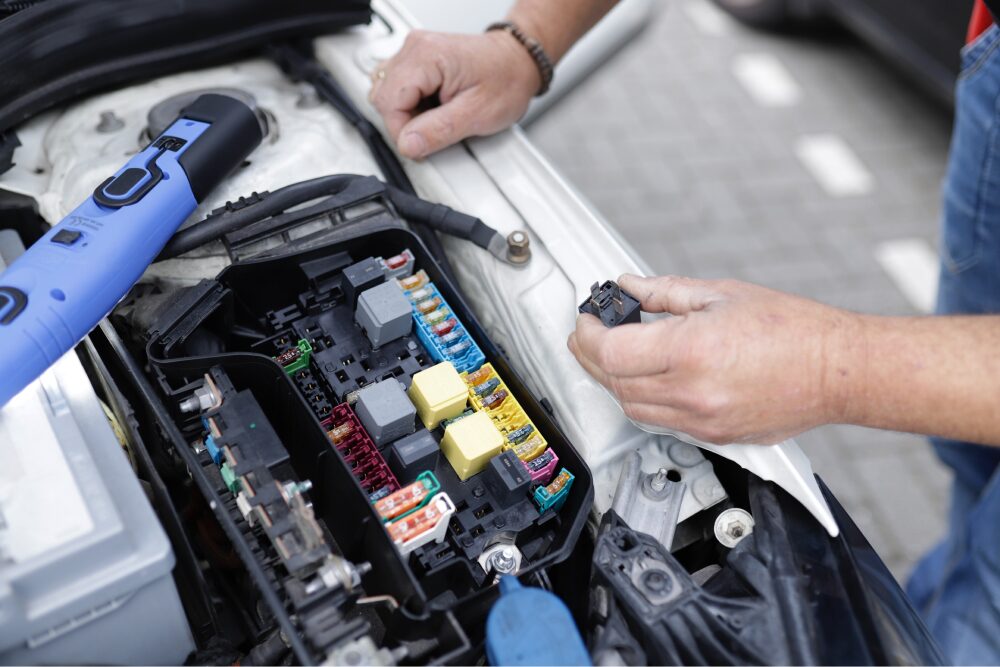
Vehicle diagnostics involves the exchange of diagnostic data between electronic control units (ECUs) and a testing tool. A diagnostic tool is essential for facilitating communication between these components.
Our diagnostic process includes hands on fault verification due to instances of a single fault triggering other faults.

At its core, programming involves the installation or updating of software within a control module. This process is often necessary in the following scenarios:
- When replacing a brand-new module that arrives without any pre-installed software. - When implementing a software update as specified by a Technical Service Bulletin (TSB). - When integrating a module into the vehicle's network for the first time.
Coding involves modifying predefined parameters in an existing software program; you're not altering the software itself but rather instructing it on how to operate.
Through coding, we can:
- Enable or disable specific features - Adjust comfort preferences - Tailor the behavior of safety and performance systems
ECU cloning fundamentally involves replicating the software and data from one ECU to another. This process requires a careful sequence of reading the programming and data from the original ECU and accurately transferring this information to a target ECU. The result is that the second ECU becomes a fully functional duplicate, or "clone," of the original.